
Uncategorized
How Vitamin C Removes Chlorine in Shower Water and Why SUHAE Is More Than Just a Filter

Mar
Chlorine is essential for disinfecting municipal water supplies. It protects against harmful microorganisms and keeps tap water safe. However, what makes water microbiologically safe does not necessarily make it ideal for repeated skin exposure under hot shower conditions.
Chloramine behaves differently from free chlorine, and some UK supplies use it rather than free chlorine. We cover why that matters, and why vitamin C has a better claim on it than carbon does, in chloramine and vitamin C.
During showering, chlorine behaves differently than it does in cold drinking water. Heat increases volatility, meaning chlorine can evaporate into the air and be inhaled. Research published in Environmental Health Perspectives found that inhalation exposure during showering can contribute significantly to overall daily chlorine intake.
Another study in the Journal of Water and Health reported that concentrations of certain chlorine byproducts in shower air may be six to ten times higher than levels found directly in tap water.
Beyond inhalation, chlorine is a strong oxidising agent, which means it reacts with proteins and lipids it comes into contact with.
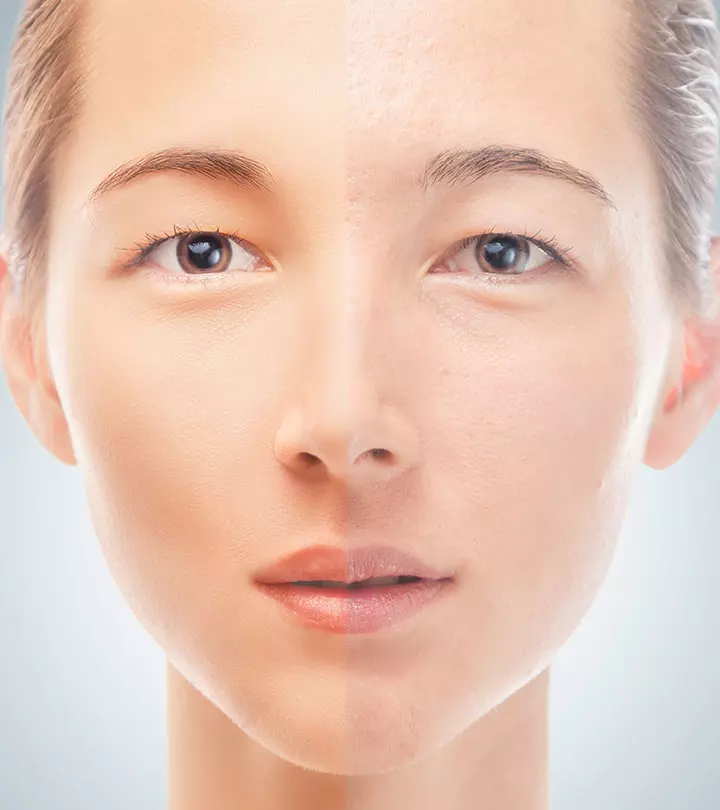
The Science: How Vitamin C Neutralises Chlorine
Vitamin C, or ascorbic acid, works through a reduction reaction. Chlorine seeks electrons because it is an oxidiser. Vitamin C donates electrons, converting reactive chlorine into stable chloride ions. Chloride is significantly less reactive and naturally present in many foods and in the human body.
The reaction is fast. Research published in Water Research shows that properly dosed ascorbic acid can neutralise up to 99 percent of free chlorine within seconds. This rapid reaction makes vitamin C especially suitable for shower filtration, where water flows quickly and contact time is limited.
Unlike standard carbon filtration, which primarily adsorbs contaminants, vitamin C chemically transforms chlorine. This means it does not simply trap chlorine temporarily. It converts it into a different, more stable compound.
Ascorbic acid reduces chlorine fast, and it still works in hot water, where some conventional filters become less efficient. The Suhae shower filter puts that to work: KEWI certificate IW-230133 recorded 99.9% chlorine removal.
SUHAE: Chlorine Neutralisation and Cartridge Hygiene
SUHAE integrates high grade vitamin C technology into a shower system engineered for immediate neutralisation. As water passes through, chlorine is chemically converted before reaching the skin. The design maintains strong, consistent water pressure while ensuring effective interaction between water and active components.
SUHAE does not stop at chlorine removal. The filter media is tested to resist bacteria growing inside the cartridge (KIFA KFIA-110), which matters in a shower, where the cartridge spends its life warm and damp.
One cartridge therefore covers two things, chlorine neutralisation and its own hygiene:
1. Reducing oxidative exposure from chlorine.
2. Media that resists bacteria growing inside the cartridge.
This dual approach supports a cleaner and more hygienic shower system overall.
KEWI certificate IW-230133 recorded 99.9% chlorine removal for the Suhae shower filter, and found no chlorine at six sample points from 1,000 to 6,000 litres. The unit also holds its structure in humid bathrooms.

Why This Matters for Daily Skin Exposure
Skin is repeatedly exposed to shower water, often twice daily. Even when chlorine levels meet regulatory standards, repeated oxidative contact can influence skin comfort. By neutralising chlorine at the point of use, SUHAE changes the water you stand in.
Instead of relying on passive filtration alone, SUHAE uses an active chemical reaction supported by established water chemistry research. That is what separates it from a basic shower head or a standard carbon cartridge.
Chlorine does an important job in the public water supply. Once the water reaches your home, you can decide what is still in it when you shower. Vitamin C neutralises chlorine, and that reaction is what SUHAE is built around.
For those looking to elevate their daily routine beyond basic filtration, SUHAE offers a targeted, research-aligned solution designed for both performance and hygiene.
The chemistry is one thing and the measurement is another. We publish the test report, the volumes it covers and what it does not cover here: does vitamin C actually remove chlorine.
